Marty Supreme
Directed by Josh Safdie
★★★★★
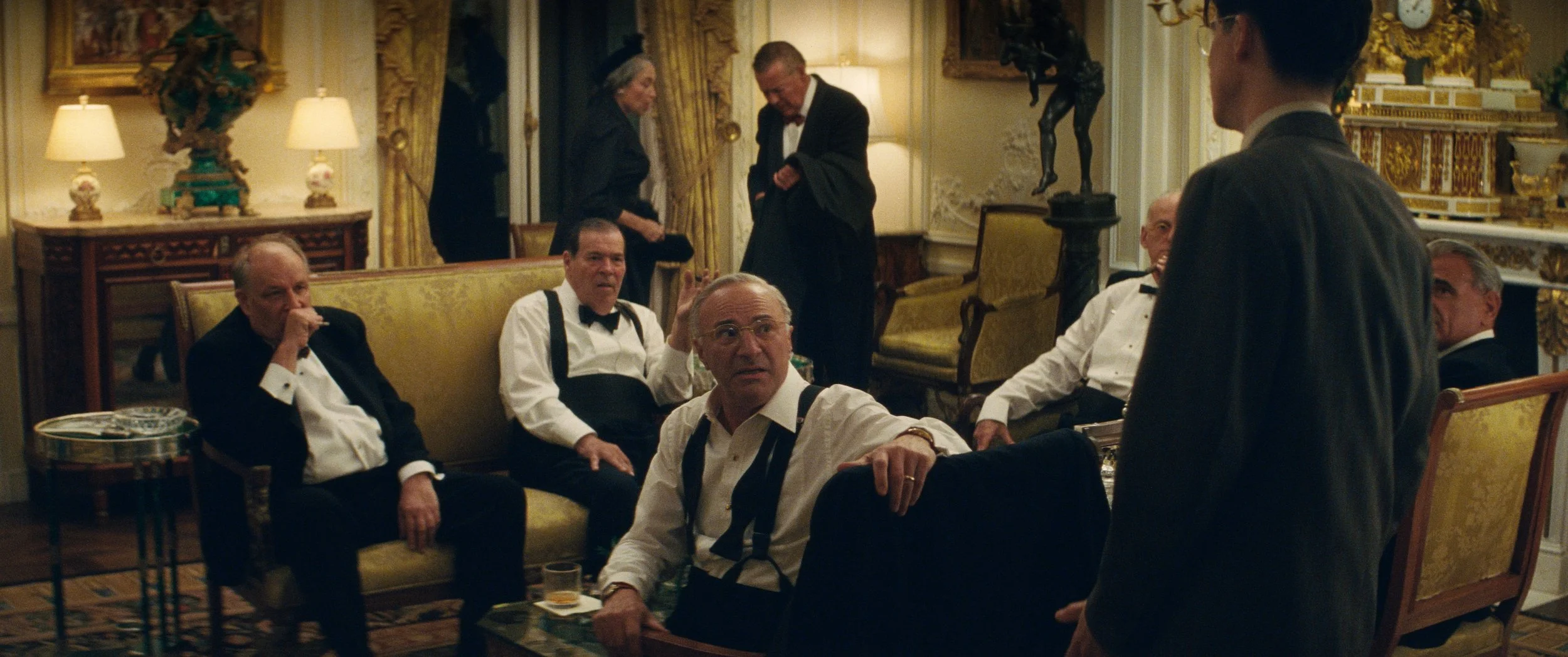
There’s a particular kind of exhaustion that comes from watching movies that want to be important but never quite earn it. Prestige without pulse. Ambition without blood. For the better part of the last few years, cinema has been stuck in that loop—well-made, well-acted, utterly forgettable. Marty Supreme breaks that cycle like a fist through glass. Josh Safdie’s film doesn’t politely ask for your attention; it hijacks it. This is a movie that hums, rattles, and eventually roars. It’s the first film in a long time that feels genuinely great—not because it aims for greatness, but because it refuses to settle for anything less than obsession.
At the center of that obsession is Timothée Chalamet, delivering a performance that feels less like acting and more like possession. As Marty Mauser, Chalamet doesn’t play ambition—he embodies it, twitching and vibrating with an internal pressure that never fully releases. Marty is a ping-pong hustler, yes, but the sport is merely the surface tension. What Marty is really chasing is proof: proof that he matters, that he exists loudly enough to drown out his own doubt. Chalamet captures that hunger with frightening precision. Every grin feels rehearsed, every outburst feels improvised, every quiet moment feels like a lie he’s telling himself. It’s the kind of performance that recalibrates how seriously we talk about movie stardom. If there’s any justice left in awards season, this one ends with Chalamet standing alone.
Safdie’s direction leans hard into anxiety, and the result is panic-attack-inducing in the best way. The tension here mirrors Uncut Gems, not in repetition but in philosophy. The camera stalks Marty like a debt collector. Scenes don’t resolve so much as they pile on top of each other, stacking pressure until relief feels impossible. Conversations overlap, stakes escalate mid-sentence, and victories feel temporary by design. Watching Marty Supreme is like being locked in a room with someone who can’t stop talking because silence might mean facing himself. Safdie understands that tension isn’t just about speed—it’s about inevitability. You know something will break; the question is what, and how violently.
What elevates the film beyond a mere exercise in stress is how grounded and assured the writing is. The script is sharp without being flashy, confident without announcing itself. There’s no wasted dialogue, no explanatory crutches. Characters speak the way people do when they’re negotiating power, pride, and survival all at once. Marty’s arc isn’t built around learning a lesson or becoming a better man. It’s built around confrontation—forcing him to look at the wreckage he leaves behind and decide whether he can live with it. Some will argue that Marty isn’t redeemed by the end, and they’re right. But the film isn’t interested in redeeming him for us. It’s concerned only with whether Marty can redeem himself in his own eyes, which is a far more brutal standard.
The supporting cast understands this assignment completely. Odessa A’zion brings a grounded emotional intelligence to her role, even if she is never honest with herself when it comes to Marty. She plays someone who sees him for who he is and who she is in his eyes, even if her words are not as honest in her knowledge as her eyes are. The restraint and ambivalence in her performance gives the film much-needed oxygen. Gwyneth Paltrow, in a role that negotiates glamour and gravity, offers a portrait of someone who understands the cost of chasing relevance too long. There’s an ache to her presence, a sense of time pressing in, and it adds a quiet melancholy to the film’s louder moments.
Then there’s Kevin O’Leary, who could have easily been stunt casting but ends up being anything but. As Milton Rockwell, O’Leary is unnervingly effective. He doesn’t dominate scenes with volume; he controls them with stillness. Rockwell represents the version of success Marty thinks he wants—wealth, authority, untouchability—and O’Leary plays him as a man who has already paid the price for that illusion. There’s no warmth here, no wink to the audience. For a first-ever film performance, it’s remarkably disciplined and surprisingly menacing, proving that presence matters more than pedigree.
Visually, Marty Supreme is stunning without drawing attention to itself. The cinematography has texture—grainy, lived-in, slightly grimy in a way that mirrors Marty’s internal state. The world feels crowded even when Marty is alone, as if the weight of expectation follows him everywhere. The film understands that beauty doesn’t come from polish, but from intention. Every frame feels chosen, not decorated.
By the time the credits roll, Marty Supreme leaves you unsettled, energized, and strangely reflective. It doesn’t wrap itself in comfort or reassurance. It doesn’t ask to be liked. It dares you to sit with it. In an era where too many films are engineered to be consumed and discarded, this one lingers like a bruise you keep pressing just to remind yourself it’s real.
No movie in recent years has truly felt essential. Marty Supreme does. It’s tense, smart, beautifully made, and anchored by a performance that will be talked about for years. This isn’t just an announcement of the solo capabilities of Josh Safdie—it’s a declaration. Cinema isn’t dead. It was just waiting for someone reckless enough to believe in it again.